
How to Enforce Your Cancellation Policy Without Guilt: Tips to Reduce No-Shows, Protect Your Income, and Support Your Practice
Feeling unsure about actually charging a no-show or late cancellation fee?
Here’s the harsh truth. Every no-show costs more than just time: just three no-shows or late cancellations per week can add up to $20,000 a year in lost income. Not to mention, not enforcing your policies can lower your job satisfaction and increase feelings of resentment.
Honouring your policies helps protect your time, energy, and the care you offer every client. So, it’s not just about the fees, it’s about creating a practice that supports you, too.
Why Enforcing Your Cancellation Policy Matters
No-show and cancellation policies are not a punishment, and it’s time to stop thinking of them that way. A mindset shift I like to practice is that they are put in place to create some accountability as to how clients treat their appointments. Put another way, your policies are there to help you honor your mutual commitment. It sends the message that: “Your time matters. And so does mine.”
Policies are created to address patterns of behaviour. If a client chooses not to prioritize their session, that’s okay. But they’ve agreed to your policy, and part of that agreement is taking responsibility for their choices.
Will everyone love it? Maybe not.
But I often ask myself this: If someone is upset because I did exactly what I said I would do, do I really want them in my practice?
When It’s Okay to Use Discretion
Of course, there will be some times you practice discretion. Personally, I don’t charge if the person has experienced an emergency or something well beyond their control, like a vehicle collision or an urgent medical issue. However, I make these decisions on a case-by-case basis, and thankfully, they aren’t too common.
Most often, it comes down to people forgetting, losing track of time, or setting other priorities for that time, and in those cases, it’s so important and necessary to uphold your policy.
What Every Strong Cancellation Policy Should Include
If you're not sure your policy is strong or clear enough (or you're starting fresh), here’s a quick checklist to keep it simple and clear:
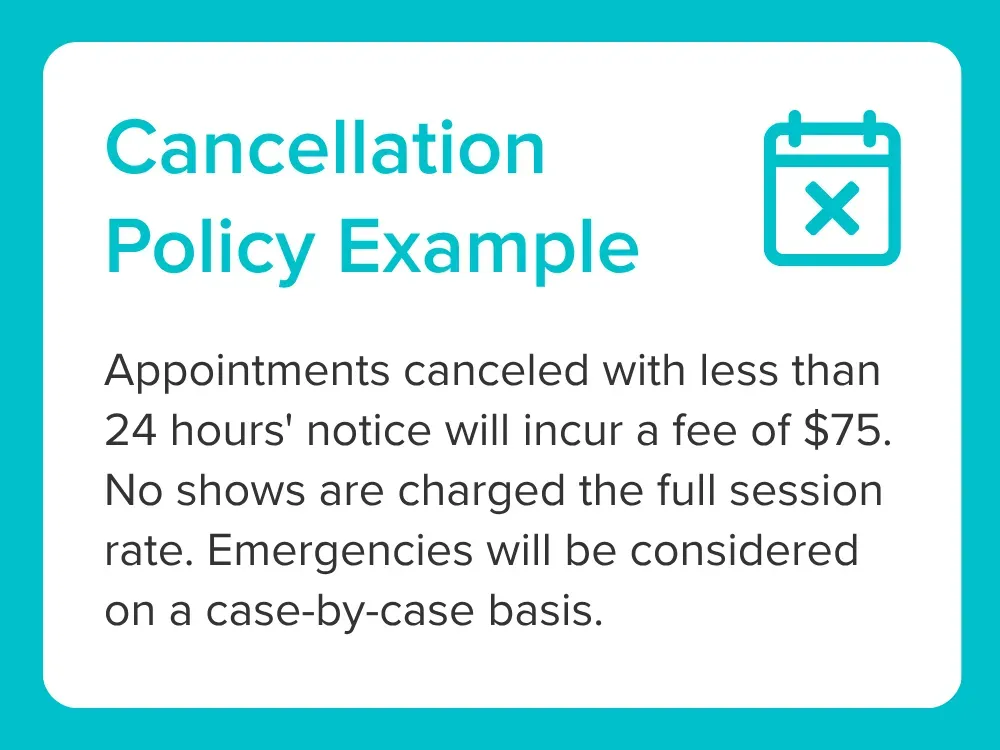
- How much notice is required to cancel or reschedule (e.g., 24 or 48 hours)
- What qualifies as a late cancel or no-show
- The fee amount that will be charged
- When and how the fee will be charged
- How clients should notify you of a last-minute change
How Jane Helps You Enforce Policies with Confidence
You don’t have to do this all on your own. One of my favourite things about using Jane is how it supports me in this process from start to finish:
- Automated reminders via text and email mean clients are given lots of nudges about their appointment. This alone has dramatically reduced the number of no-shows and late cancellations in my practice.
- You can add a clear and concise cancellation policy right in your intake forms, so every client sees and agrees to the terms up front.
- With Jane Payments, you can store a card on file (with consent) and charge your fee automatically, without chasing down payments. There is also the option to collect a booking deposit, which can act as the cancellation fee should the client not attend their appointment.
These features take the pressure off, automate your workflow, and support clear communication right from the start.
Your Role in Reinforcing the Policy
Even with great systems in place, there are some powerful personal practices that make all the difference.
- Go over your cancellation policy in person at the client’s first appointment. Don’t just rely on the intake form. We know many people skim and check boxes! A quick conversation reinforces the importance of the policy and creates space for questions and dialogue.
- Document the conversation in your notes. It doesn’t need to be long, just a quick note that you reviewed the policy can help clear up confusion down the road.
- Check in before charging. If a client no-shows, I always like to make sure I call them first. I want to make sure they’re safe, and it gives me a chance to talk through the charge and help them rebook their session.
This combo: clear communication, documentation, and kindness, helps you stay grounded and professional while still upholding your policies.
Consistency Makes Policies Feel Fair, Not Personal
If you’re in a clinic where policies aren’t currently being enforced, it might be time to open up a conversation. Respecting boundaries is essential to a strong therapeutic relationship, and inconsistent enforcement makes it harder for everyone.
Consistency is kindness. When the whole team is on the same page, the policy feels less personal and more professional, like any other part of the practice.
If you’re not the clinic owner, but cancellation policies aren't being upheld, try introducing the conversation something like this:
“I’ve noticed we’re not consistently enforcing the cancellation policy, and I’m starting to feel the impact, both financially and energetically. I want to be respectful of clients, but also of my own time. Can we revisit how we’re handling this so that there’s clarity for everyone?”
💡 You can learn more about striking the balance of caring for your patients and caring for your business in this article.
Your Practice, Your Policies
The good news?
People will surprise you in the best way.
About 9.99 times out of 10, they totally understand. And, the more you reinforce your policy, the more comfortable and confident you’ll become in doing so.
At the end of the day, enforcing your cancellation policy is about protecting your time, your energy, and your business. It reinforces your values, builds a culture of accountability, and helps you show up at your best.
Don’t let missed appointments chip away at your income or your joy. Set the boundary. Communicate it clearly. And trust yourself to hold it.
You’ve got this. 🩷
Keep Strengthening Your Boundaries
If navigating boundaries, cancellations, and sustainable practice habits feels like a work in progress, you’re not alone. These are real challenges that so many clinicians face, and practitioners like Emma are here to help.
👉 Check out Emma's website, emmajack.com, read through Emma’s Ambassador profile (and learn more about Jane’s Ambassador program!), and join the Jane Facebook Community Group.