
How to Handle Difficult Clients with Empathy and Care
We’ve all been there. The phone rings, and you realize you’ve got a difficult or upset client on your hands. Whether it’s a well-meaning “chatty Kathy” or an angry caller looking for a quick fix, knowing how to deal with difficult clients is just part of the job for anyone at the front desk. As someone who has trained numerous front desk staff over the years, Jenn Collins has learned a few key strategies that can help you handle difficult client interactions with empathy and confidence.
Read on to learn not only how to manage these tricky client conversations, but also how to turn challenging moments into positive client experiences.
Start every difficult client interaction with empathy: the H.E.A.R.T approach
It’s easy to get defensive when a client or patient is upset, but it’s so important to remember that their anger is about the situation, not you personally. Reframing your role as a problem-solver and communicator rather than “the person who caused the problem” can be empowering when dealing with difficult clients.
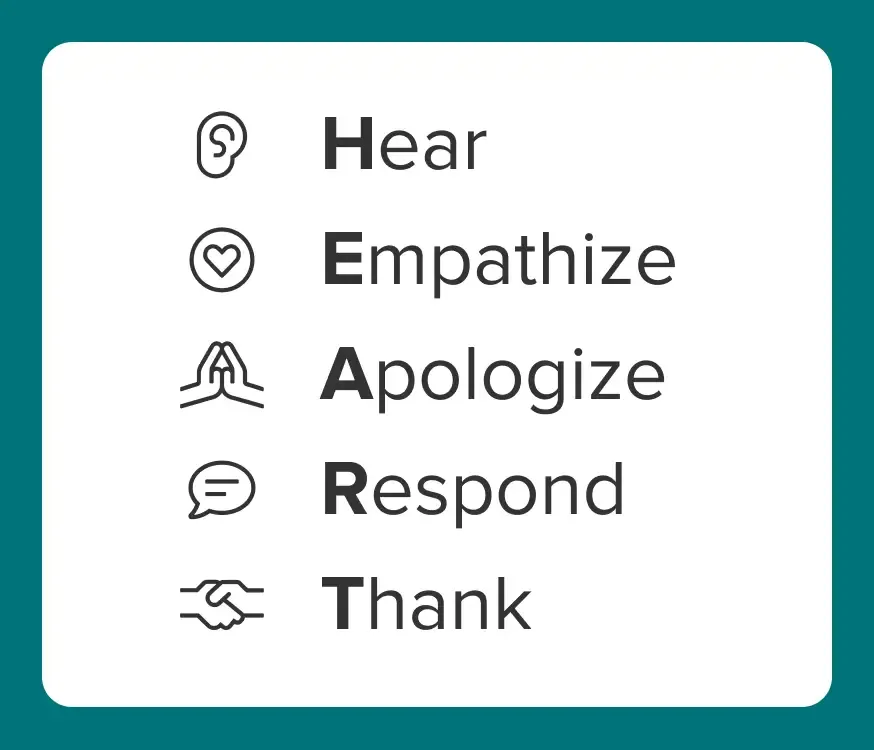
I like to reference the Cleveland Clinic’s communication model, H.E.A.R.T, to navigate sticky situations: Hear, Empathize, Apologize, Respond, Thank. This is your lifeline for keeping things calm, even if a customer’s blood is boiling.
Practice tricky client conversations before they happen
Sure, role-playing might seem awkward at first, but it’s an incredible tool for equipping your team with skills and confidence to handle tricky client interactions with care. You can practice redirecting a chatty or talkative client with phrases like, “Great questions! Your provider will handle those in your session,” “let’s get you booked first.” Or work on calming an upset caller with acknowledgment, a sincere apology, and a proactive solution. Your team will appreciate having go-to phrases in their mental toolkit.

How to enforce clinic policies with compassion (and still keep boundaries)
When someone misses an appointment, I always encourage my team to start by checking in with empathy: “We had you scheduled with Anne at 3 pm today. We hope everything’s okay.” This shows you care and aren’t jumping to conclusions about why the client missed their appointment. The last thing we want is to leave a bad taste in someone’s mouth over a simple mistake or circumstance outside of their control.
If it’s a regular client who has never missed an appointment before, and it’s an emergency situation, you might choose to waive the cancellation fee altogether. Life happens! However, if you suspect the client is a repeat no-show client, check with the provider first to get the full picture on their usual behavior before deciding. And if it is time to enforce a boundary, set boundaries with kindness. Clear communication and consistency help your team handle difficult clients respectfully while maintaining your clinic’s policies.
💡 If you’re looking for more ways to approach these tricky moments, check out this piece from physical therapist Emma Jack on how to enforce your cancellation policy without guilt.
The power of a provider’s personal touch
Routine appointment reminders and follow-up emails can only do so much. A direct phone call from the provider adds a personal touch that can make all the difference when major issues or ongoing problems arise. Use discretion to decide when a provider should step in, typically for significant issues, extremely difficult clients, or when things haven’t been resolved through the usual channels. It’s not just about fixing the problem; it's also about rebuilding trust and strengthening the provider–client relationship. When handled with care, these moments can transform challenging client interactions into long-term loyalty.

Documenting client interactions: how a paper trail protects everyone
One of my biggest takeaways in handling tough client interactions is keeping a clear paper trail to document events and decisions. A well-maintained record clarifies past conversations, tracks agreements, prevents misunderstandings, and protects both parties. After resolving a dispute, always follow up with a written summary. For example: “As discussed, we noticed a double charge and are working to fix it. You should see a refund in two days.”
💡 Keeping accurate records is simpler when your documentation, messages, and client notes all live in one place. Clinic management tools like Jane make it easy to attach notes or summaries directly to a client’s chart, so your team stays organized and connected.
How to end a client relationship professionally and with care
Sometimes, a client pushes boundaries too far, and it’s time to part ways. When this happens, you can start by consulting your malpractice insurance, then document everything: what happened, when, and with whom. Afterward, send a polite email explaining why it’s best to end the professional relationship, and, if appropriate, suggest other providers. Keep it professional, empathetic, and, most importantly, in writing.
📖 This article was originally published in volume 4 of Front Desk magazine and has been modified and updated.
You can find more from Jenn Collins and her team at Acu-Hub.com